What is a pendant lamp?
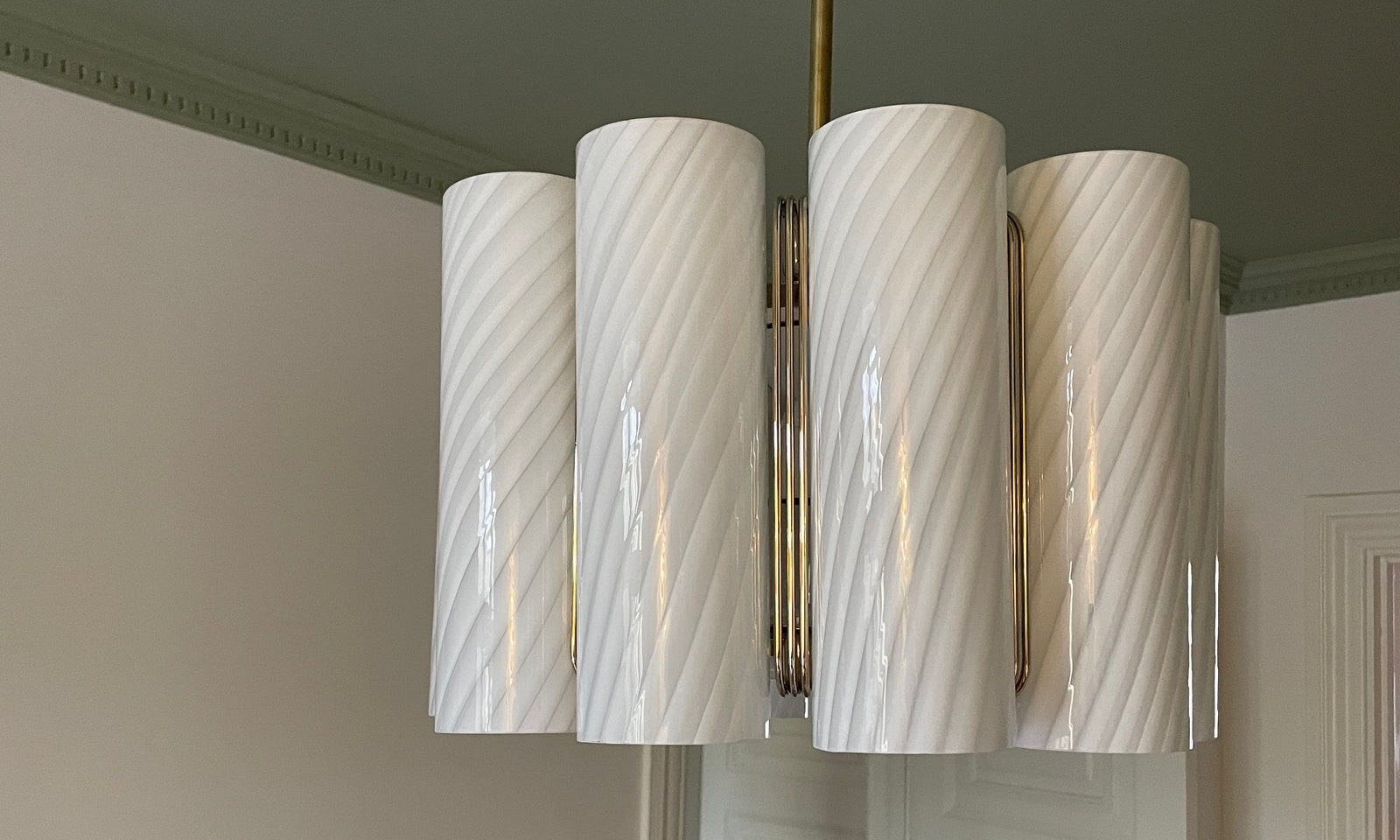
A pendant lamp hangs down from the ceiling and brings the light closer to the area it needs to light. It is often used above the dining table or kitchen counter, where it can gather the light around a particular surface. How far the lamp should hang down depends on the room and on what it is used for.
Pendant lamps come in many different styles, from small glass shades to larger models that take up more visual space. In this article we look at what characterises a pendant, how it differs from other ceiling lamps, and what to consider when choosing one for your home.
Why is it called a pendant lamp?
The word pendant describes the way the lamp hangs. Instead of sitting right up against the ceiling, the lamp hangs down into the room, bringing the light source closer to the spot that needs light.
That makes a pendant well suited above tables and kitchen islands, among other places. Depending on the shape and material of the shade, the lamp can give a focused light downwards and also add to the general lighting.
A pendant is therefore defined first and foremost by the way it hangs. The look can vary a lot, and both classic metal shades and colourful glass lamps can be pendants.
A pendant and a ceiling lamp are not quite the same
A pendant is a type of ceiling lamp, but not all ceiling lamps are pendants. A flush mount, for example, sits close to the ceiling, while a pendant hangs further down into the room.
The difference matters both for the light and for how you experience the lamp. A lamp close to the ceiling can spread light over a larger area without taking up much space. A pendant, on the other hand, becomes a more visible part of the interior and can place the light more precisely.
Among vintage ceiling lamps you will therefore find different shapes, sizes and fittings, all of which affect how the lamp works in the room.
Where do you use a pendant?
The dining table is one of the most obvious places for a pendant. Here the lamp can hang fairly close to the tabletop and create a defined pool of light around the dining area.
Pendants also work well above a kitchen island, where several smaller lamps can be spread along the counter. In a corner of the living room, a low-hanging model can be an alternative to a floor or table lamp. What matters is that the lamp isn't in the way. Where people walk underneath it, it should hang higher than above a dining table.
The shape decides much of the light
Two pendants with the same bulb can give very different light. The shape and material of the shade decide where the light goes. A closed or wide shade can direct much of the light down towards the table. A lamp in clear or coloured glass will typically let more light escape around it, and can therefore also add to the atmosphere in the rest of the room.
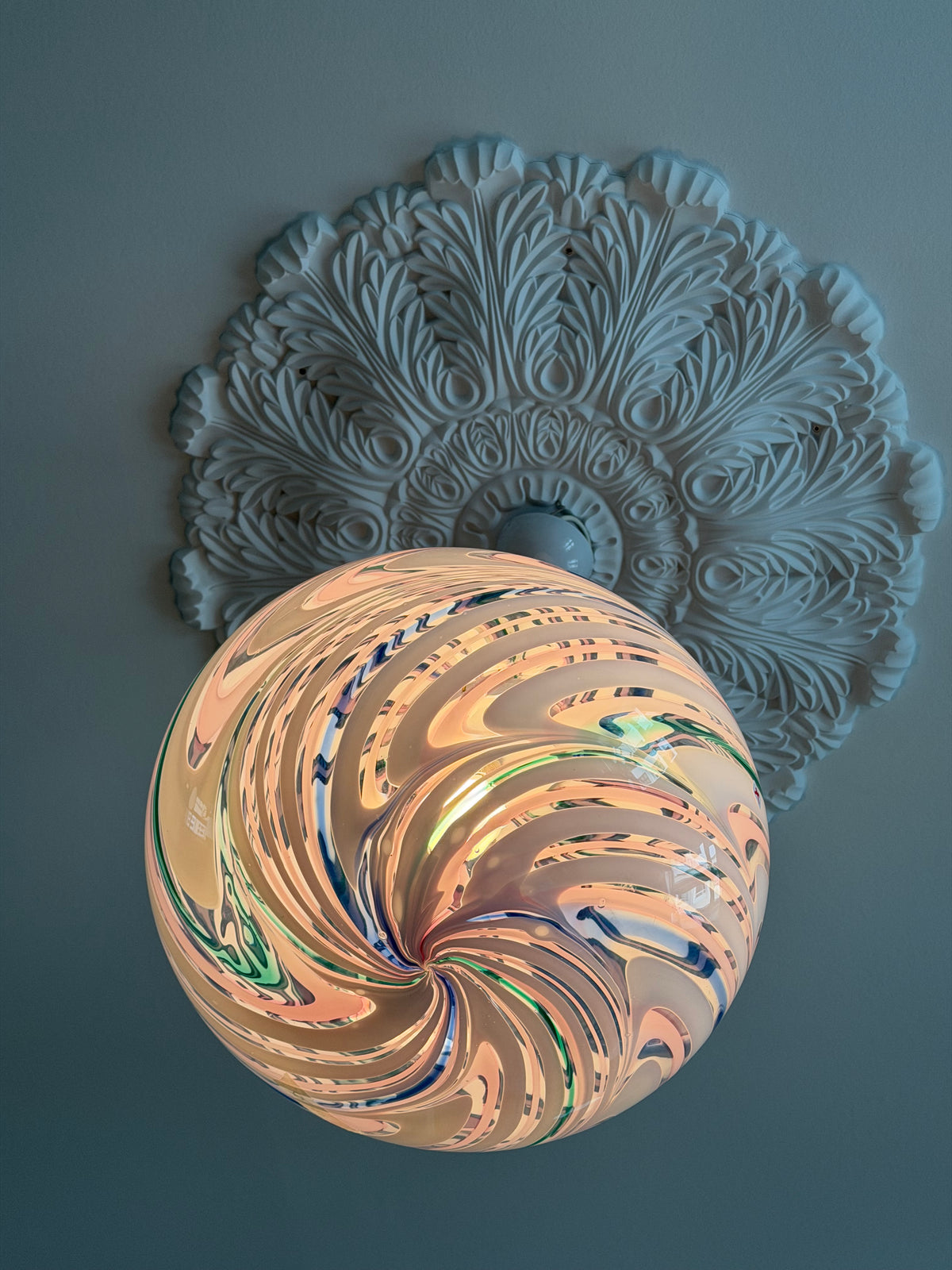
You can see this clearly in Murano ceiling lamps and pendants, where the glass, shape and thickness can create very different effects. So it is worth considering whether the lamp should mainly light a surface, or whether it should also spread light into the room.
A large or a small pendant?
Size should be judged against both the furniture below the lamp and the room itself. A small pendant can disappear above a long dining table, while a very large lamp can feel heavy over a smaller table.
Above a long table, one elongated lamp can work well, but several smaller pendants are also an option. That way the light can be spread over more of the table.
In smaller rooms, a lighter lamp in glass can be an advantage, because you can still see through or around it. That doesn't necessarily mean the lamp has to be physically small. The material also affects how much space it takes up visually.
How high a pendant should hang
The height depends on where the lamp hangs. Above a dining table, around 60 to 70 cm from the tabletop to the bottom edge of the lamp is a common starting point. The light comes close to the table without the lamp necessarily blocking the view.
In an open area where people need to walk under the pendant, it should of course hang higher. Above a kitchen island, the height also needs adjusting so the lamp isn't in the way when the counter is in use. So don't just look at the distance from the ceiling. The pendant should first and foremost suit what happens below it.
Glass pendants give a different look
Glass is a popular material for pendants because the light can play with the lamp itself. Clear glass lets much of the light through, while coloured or opal glass can soften it and change the atmosphere around the lamp. Hand-blown glass often has small variations in thickness or shape. On vintage models, those very differences can be a visible part of the craft. See our selection of glass pendants if you are looking for a glass pendant for your home.
Among Murano lamps there are plenty of examples of how coloured glass can make a lamp interesting even when it's switched off.
One pendant or several?
There is no rule that only one lamp should hang above a table. Two or three smaller pendants can spread the light well over a long surface. If the lamps are identical, you get a calm and coherent look. Different models can also work together if they have something in common, such as the glass, size or period.
With vintage lamps it can be harder to find several identical pieces. Instead, the differences can be used deliberately, so the lamps belong together without being an exact set.
Think about the lamp before you shorten the cord
When mounting a pendant, it can be tempting to decide the height straight away. It is often better to try the lamp out first, especially if it is going to hang above a table.
Look at it from several places in the room, and sit down if the lamp hangs above a dining area. A height that looks right standing up can feel completely different from a chair. Switch the lamp on when it is dark, too. That makes it clearer whether the light falls in the right place, and whether the pendant should go up or down a little.
Find a pendant that suits your home
A pendant lamp, then, is a ceiling lamp that hangs down into the room and brings the light closer to the area it needs to light. That simple principle leaves room for many different looks, because size, fitting and material can all vary from lamp to lamp.
When choosing a pendant, it is worth starting from the place where it will hang. Consider how much light you need, how much space the lamp may take up, and how it works with the rest of the room.
At Farveladeland you will find a changing selection of hand-picked vintage lamps, including glass pendants and other unique ceiling lamps. Explore the selection if you are looking for a lamp with its own shape, colour or story.