What is Murano glass?
Murano glass is hand-blown glass from the islands of Murano in the lagoon off Venice. The name covers the place, the craft and a long tradition of coloured and patterned glass that is one of the most recognisable looks in Italian design today.
Here is the short answer to what Murano glass is, how it's made, and why it is still so sought after. If you want the full history and every hallmark, read the ultimate guide to Murano glass.
Murano is a place, not a style
Murano is a small group of islands in the lagoon off Venice, connected by bridges. More than 700 years ago, the city's glass workshops were gathered here, partly to reduce the risk of fire in Venice itself. Ever since, the islands have been the centre of Italian glass art.
That means genuine Murano glass is made on Murano. Glass that looks similar but is made elsewhere in Italy or the rest of the world is not Murano, even though it is often sold as Murano-style glass. We cover the difference in the lexicon under Murano vs. other Italian glass.
The craft makes the difference
Murano glass is hand-blown and shaped by hand. The glassblower works the glass while it is molten, building up colours, threads and patterns in layers. That is why no two pieces are ever quite the same, even from the same workshop.
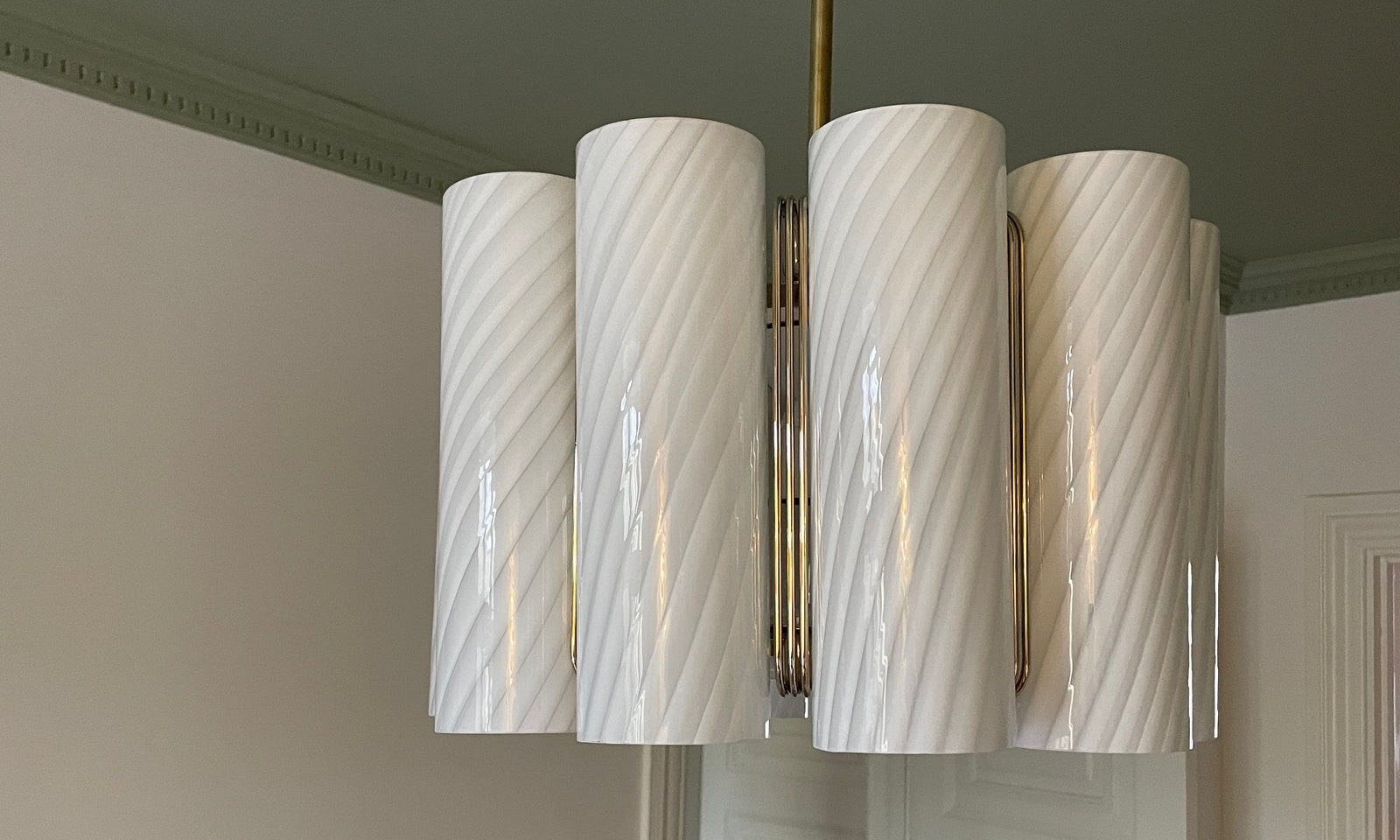
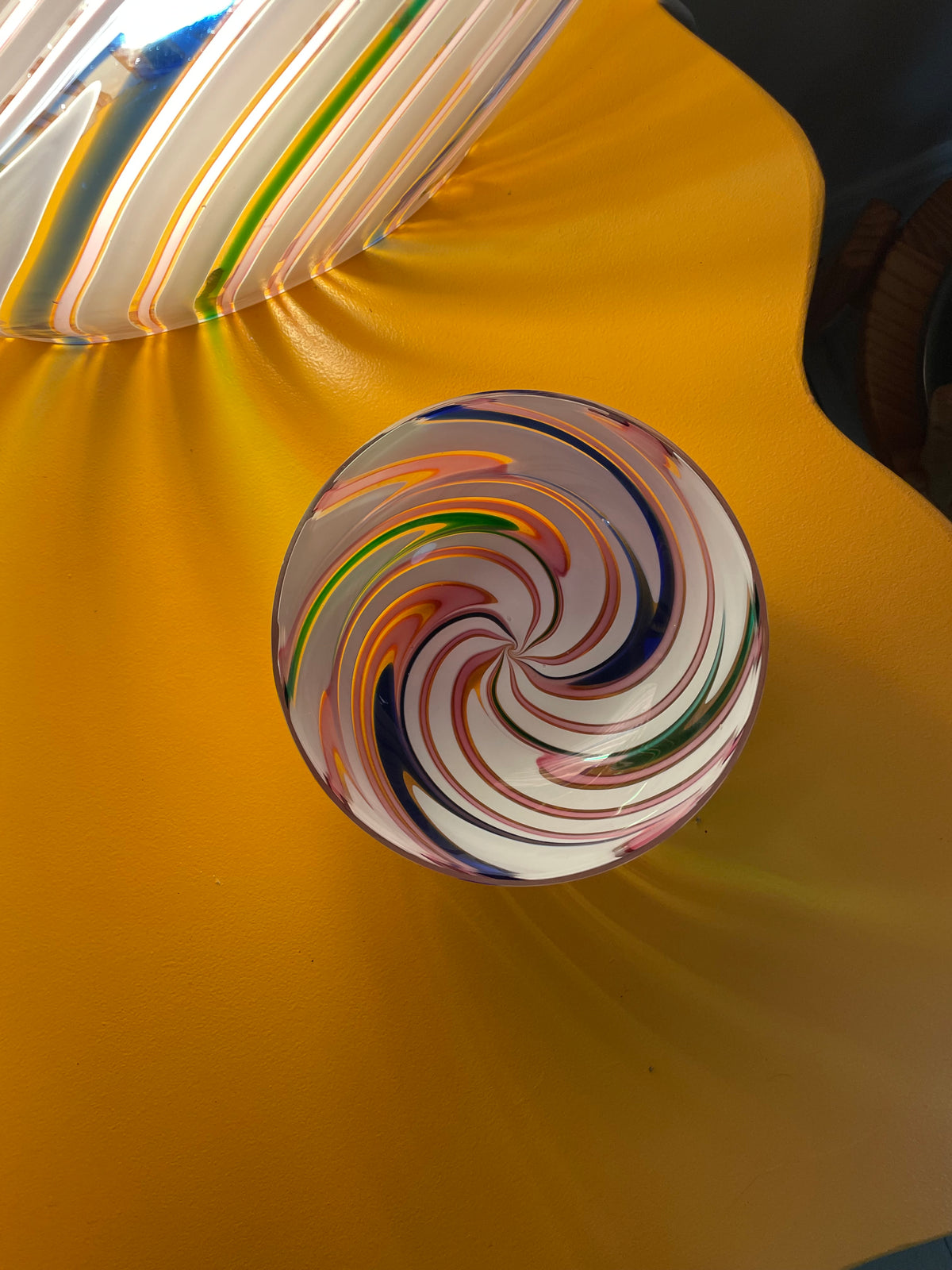
Some of the best-known techniques are sommerso, where coloured glass is cased in thick layers inside one another, and filigrana, where fine threads of white or coloured glass are drawn into the body. The classic swirl pattern that many associate with vintage Murano lamps comes from twisting the glass by hand. Read more about the sommerso technique in our lexicon.
Small imperfections are part of it
Because the glass is shaped by hand, vintage Murano often has small air bubbles, a little asymmetry or variations in thickness. These aren't flaws but traces of the craft. Many people use exactly those details to judge whether a piece is genuine.
If you want to know what to look for, we have gathered the key hallmarks in How to spot real Murano glass.
What is made in Murano glass?
Murano glass isn't one particular object. The islands have produced everything from chandeliers and lamps to vases, bowls, glass art and drinking glasses. In Danish homes it is especially Murano lamps and Murano vases that have found their way in, often in soft colours like white, pink, yellow and blue.
Many of the vintage pieces you find today date from the 1960s, 70s and 80s. The white swirl lamps and the round mushroom lamps were especially popular then, and they still are.
Vintage or new Murano glass
Glass is still made on Murano today, and new Murano glass can carry the Vetro Artistico Murano mark, which is meant to guarantee that the glass really was made on the islands. Vintage Murano glass typically has calmer, more muted colours than many newer pieces, and the small traces of the craft are often more visible.
At Farveladeland we sell vintage Murano glass exclusively. We think the old pieces have a calm and a history that new glass struggles to imitate. It is also a way of using what already exists rather than buying new.
Why is Murano glass so popular?
Murano glass can do something many other materials can't. When light hits the glass, the colours and patterns come alive, and a lamp or vase can work as a small piece of art in the home, even when it is just standing still.
At the same time, vintage Murano suits both simple and more colourful homes. A white swirl lamp can be calm and timeless, while a pink vase or a piece of Murano glass art can add a clear splash of colour to a room.
In short
Murano glass is hand-blown glass from the islands near Venice, made with techniques passed down for centuries. It is known for its colours, patterns and small imperfections, and every piece is unique.
If you are curious to see it in real life, explore our selection of vintage Murano or book a viewing at the showroom in Frederiksberg.