Distance between lamps over a dining table: how to place 2-3 pendants
You have found two or three pendants you would like above the dining table. But when they are about to go up, the question arises: how far apart should they be? Hang them too close and they look like one lump in the middle of the table. Hang them too far apart and the ends go dark and the lamps look random. And once the holes are drilled in the ceiling, moving them is a hassle.
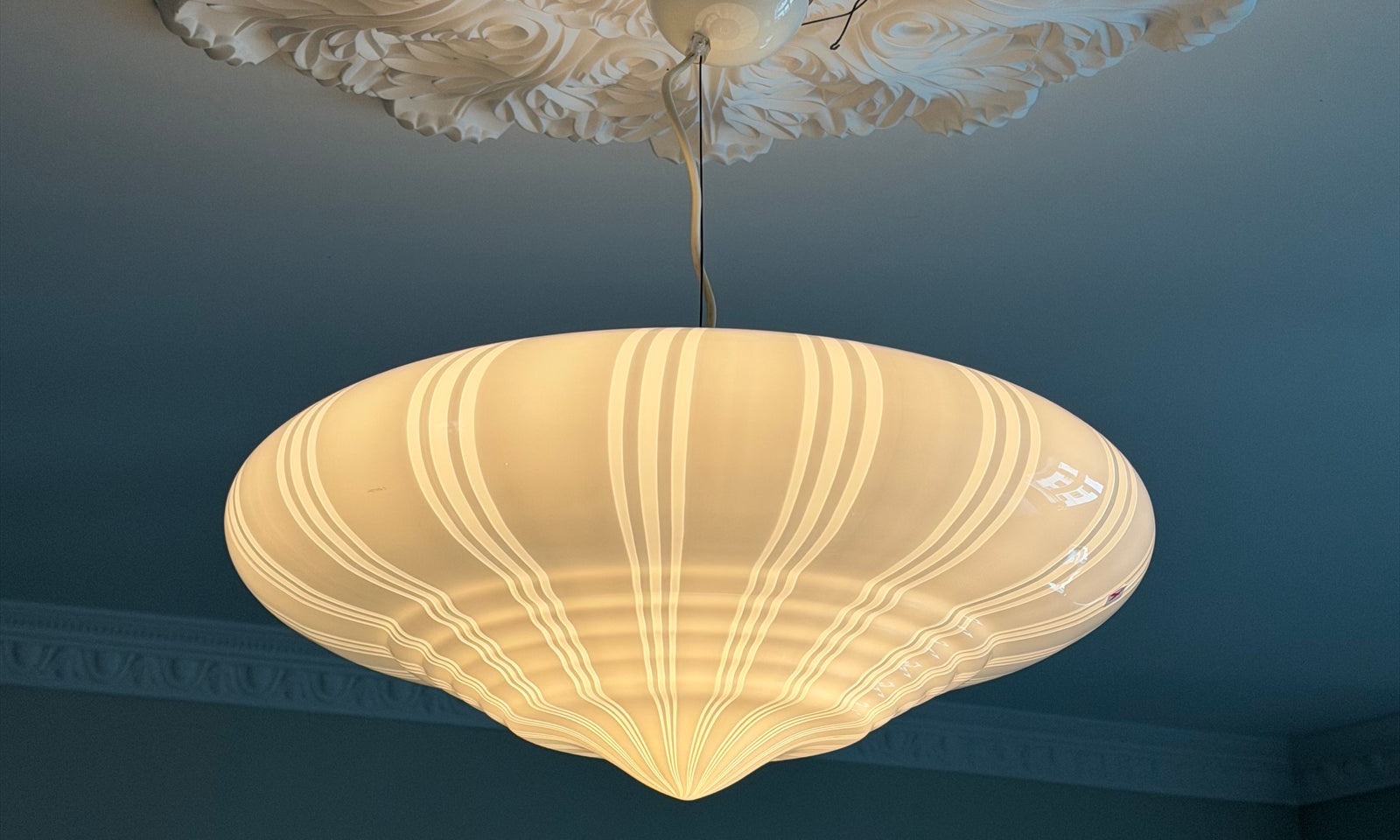
Luckily there is a simple rule: divide the table into equal sections, one for each lamp, and hang each lamp above the middle of its section. With two lamps over a 200 cm table, that means each lamp hangs 50 cm in from the end of the table. In this guide we show how the rule works on tables of different lengths, how many lamps your table can take, and what to keep in mind when the pendants go up.
How many pendants should hang above the dining table?
The number depends mostly on the length of the table. As a starting point, you can use this split:
- Under 150 cm: one lamp
- 150 to 220 cm: two lamps
- Over 220 cm: three lamps
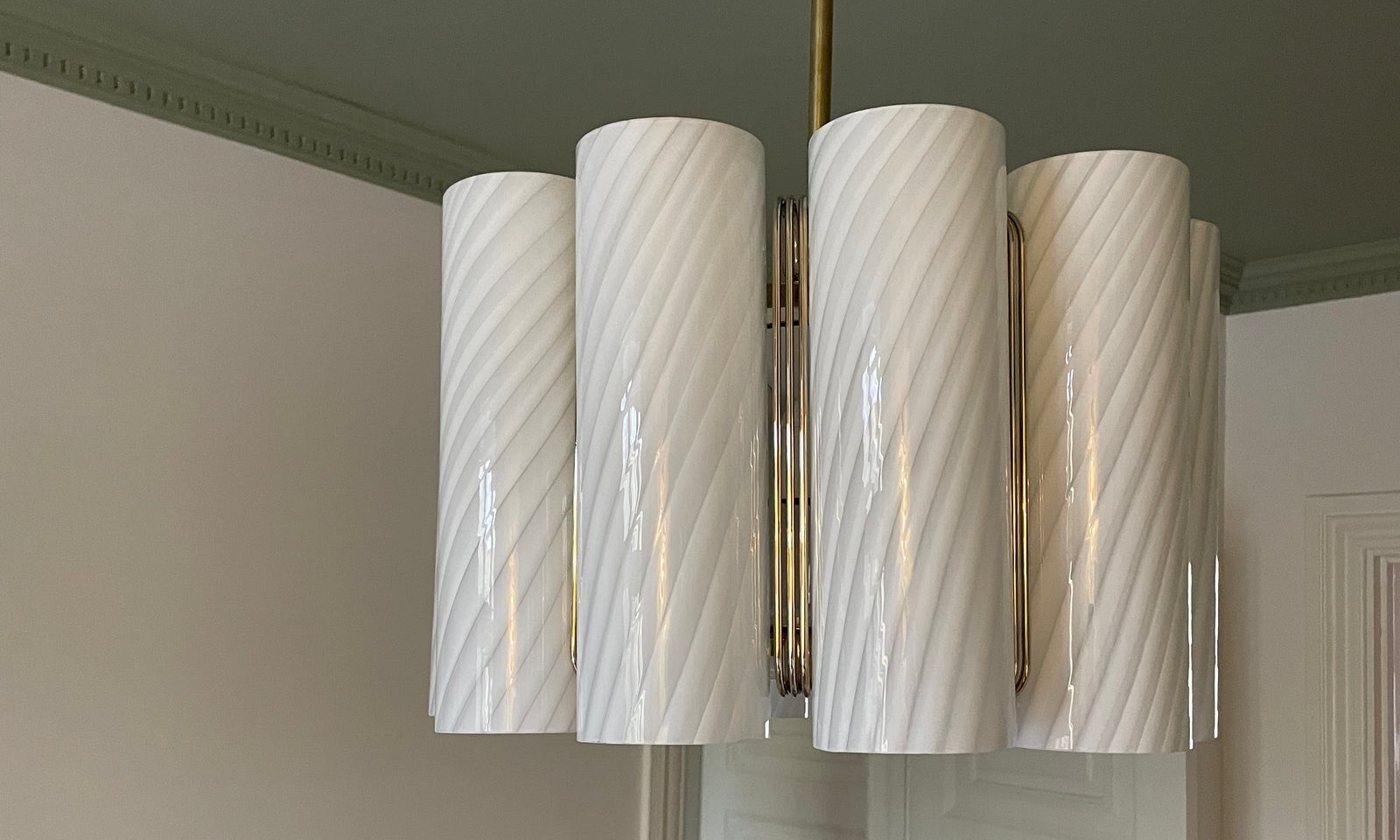
The size of the lamps matters too. Two large pendants can cover a long table, while small glass pendants often look best in threes. If in doubt, choose fewer, larger lamps. That gives a calmer look than many small ones competing for space.
How to work out the distance between the lamps
Start by measuring the length of the table and divide it by the number of lamps you want to hang. The number you get is the distance between the centres of the lamps. The first lamp should hang half that distance in from the end of the table, so there is the same amount of space at both ends.
With a 200 cm table and two lamps, for example, there will be 100 cm between the lamps, and each one hangs 50 cm from the end of the table. That way each lamp gets its own section of the table to light, and the whole looks balanced.
| Table length | Pendants | Between lamp centres | From table end |
|---|---|---|---|
| 160 cm | 2 | 80 cm | 40 cm |
| 200 cm | 2 | 100 cm | 50 cm |
| 200 cm | 3 | approx. 67 cm | approx. 33 cm |
| 240 cm | 3 | 80 cm | 40 cm |
| 280 cm | 3 | approx. 93 cm | approx. 47 cm |
Check the space between and around the lamps
Once you have the distance, look at the width of the lamps. There should be at least 20 cm clear between the edges of two lamps, otherwise they look like one lump. Between the outermost lamp and the end of the table there should also be at least 20 to 30 cm, so the light doesn't fall on the floor.
If the numbers don't add up because the lamps are too wide, you have two options: choose smaller lamps, or hang one lamp fewer. The second is often best, because it gives the lamps the space that makes them look right.
Hang the lamps on the centre line of the table
The pendants should hang in a straight line along the middle of the table's width, because even a few centimetres off to one side shows, especially on a narrow table. So measure the centre of the table across its width before you drill, and use that point as the reference for all the lamps.
All the lamps should also hang at the same height. A good starting point is 60 to 70 cm from the tabletop to the bottom edge of the lamps. You can read more about finding the exact height in the guide how high should a lamp hang above the dining table.
What about an extendable dining table?
If your table extends, place the lamps according to the length the table has day to day, since that is the one you sit at most days. When the table is pulled out for a party, it doesn't matter that the ends get a little less light, and candles can do the rest.
If the table is often at full length, three pendants can be a good solution. They spread the light over a larger area and still look right when the table is shorter.
One ceiling outlet, several lamps
Most dining rooms have only one ceiling outlet, and if two or three pendants are going up, there are several solutions. A ceiling rose with room for several cords can distribute power from the outlet to each lamp. Alternatively, you can use ceiling hooks that route the cords to the right position.
New ceiling outlets must be installed by an authorised electrician. The same applies if several lamps are to be connected to the same outlet as a fixed installation.
Should the lamps match?
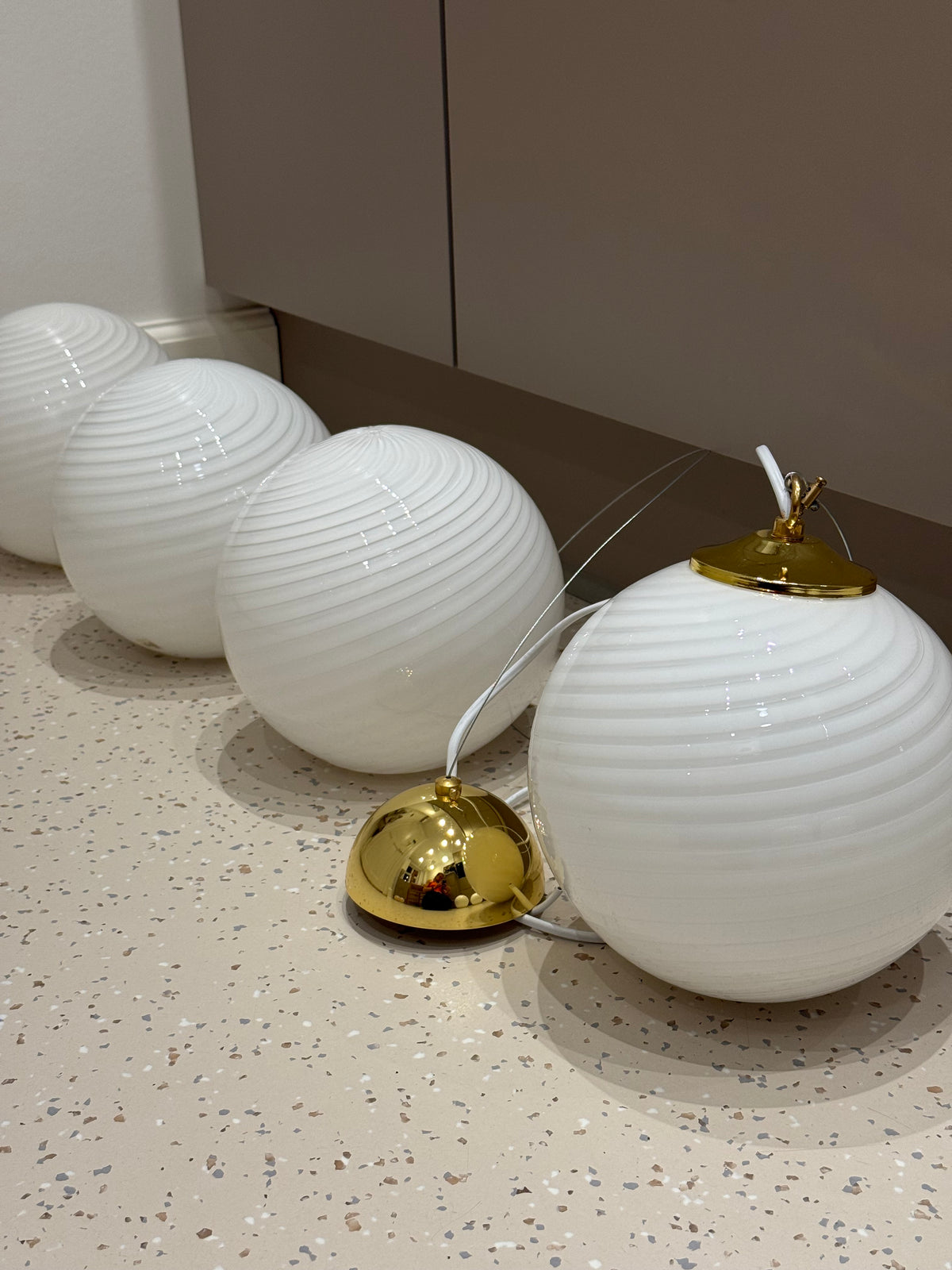
Matching lamps give a calm, unified look and are the safest choice over a long table. Vintage lamps rarely come in several identical pieces, though, and mixing can work well. Stick to lamps that have something in common, for example the same size, the same type of glass or the same colour. Then they belong together even though they aren't a set.
With different lamps it is even more important that they hang at the same height and with the same spacing. That creates the order that makes the differences look intentional.
Over a round table, one lamp in the middle is usually better than several. You can read more about that and the other choices at the dining table in the guide lamp above a dining table.
Find pendants for your dining table
The distance between lamps over the dining table is easy to work out: divide the table into equal sections, one for each lamp, and hang each lamp above the middle of its section. Then check that there is space between the lamps and at the ends of the table, and that they hang at the same height.
At Farveladeland you will find vintage pendants from Italy that can hang alone or in twos and threes above the dining table. See the selection of Murano ceiling lamps and vintage ceiling lamps. If you are looking for several lamps that go together, you are welcome to book a viewing and see them side by side.